Making Alone Is Breaking People: The Case for Collaborative Fabrication Networks
I want to tell you about a conversation that keeps happening in maker communities across the country. It goes something like this: someone has been building alone for two or three years. They've gotten genuinely good. Their workshop is dialed in, their skills have grown, and from the outside, everything looks like success. But inside, something has flattened. The projects feel less exciting. Problems that used to be puzzles now feel like obstacles. They're not sure if what they're making is any good anymore because they haven't had a real conversation about their work in months.
This isn't a rare story. It's practically a pattern.
Solo making has real virtues. The focus is real. The ownership is real. There's something deeply satisfying about building something from start to finish with your own hands and your own decisions. But there's a cost that doesn't get talked about enough, and it compounds over time.
The Specific Loneliness of Fabrication Work
Making things is cognitively demanding in ways that other solo work isn't. You're not just thinking—you're thinking across multiple domains simultaneously. Design, materials, process, tooling, tolerance, safety. When something goes wrong, the diagnostic process can branch in a dozen directions at once.
When you're working alone, all of that cognitive load lands on one person. And when you get stuck—really stuck, not just temporarily confused—there's no one to bounce the problem off. You can search forums. You can watch YouTube. But that's passive information retrieval, not active problem-solving with another human who understands your specific situation.
The creative dimension is just as real. Making involves constant judgment calls about what's good enough, what direction to take, whether a design is working. Those judgments are easier when you have people who understand the work giving you honest feedback. Without that, makers either become overconfident (nobody to push back) or deeply uncertain (nobody to validate). Both are problems.
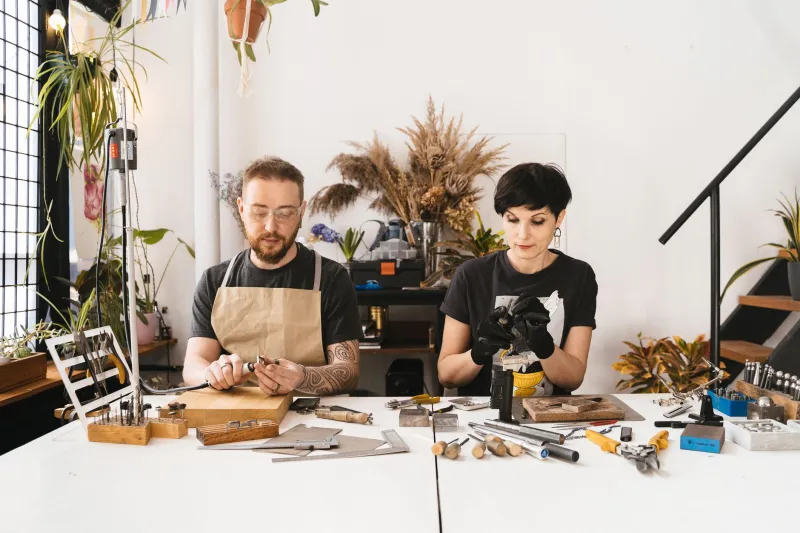
And then there's the plain human part of it. Fabrication work is often physically isolating—you're in a shop, wearing hearing protection, focused on a machine. Hours pass. The silence that felt productive in the morning can feel heavy by the afternoon.
What Distributed Collectives Are Actually Doing
The response that's emerged from the maker community isn't just "go to a makerspace." Physical makerspaces are great, but they're not accessible to everyone—geography, schedules, membership costs, and the simple fact that a lot of serious making happens on equipment you own and have configured for your specific needs all limit how much of your work you can actually do there.
What's grown up instead—partly out of necessity, partly accelerated by the pandemic—is a more distributed model of collaboration. Virtual collectives, regional networks, and structured peer communities that don't require physical co-location but still provide the connective tissue that solo making lacks.
Discord servers have become a surprisingly functional home for these communities. The better ones aren't just chat rooms—they're organized around specific disciplines, with channels for critique, troubleshooting, material sourcing, and project sharing. The asynchronous nature actually works in makers' favor: you post a photo of your problem at 11pm, and someone in a different time zone has answered it by morning.
Open Collective and similar platforms have enabled some of these groups to formalize—pooling resources for shared tool access, organizing group buys on materials, or funding documentation projects. The infrastructure for distributed collaboration has gotten genuinely good.
Regionally, networks like Baltimore's Open Works, Pumping Station: One in Chicago, and the broader Fab Lab network (which has roots in MIT's Center for Bits and Atoms) have been building inter-makerspace collaboration for years. The idea is that a maker in one city should be able to tap into the knowledge and sometimes even the equipment of spaces in other cities. It's a more ambitious version of the distributed model, and it's been working in pockets.
The Peer Review Problem (And How Collectives Solve It)
Here's something that doesn't get discussed enough: makers need peer review. Not in a formal academic sense, but in the basic sense of having knowledgeable people look at what you're doing and tell you honestly what they see.
Solo makers often skip this entirely—not because they don't want feedback, but because there's no one to ask. Or they ask people who don't understand the work, and get well-meaning but useless responses. Or they post to a general forum and get a reply from someone who misunderstood the question.
Collaborative networks that have developed trust and shared context do this naturally. When you've been working alongside (even virtually) the same group of makers for six months, they know your background, your tools, your tendencies. Their feedback is calibrated to your actual situation, not a generic answer to a generic question.
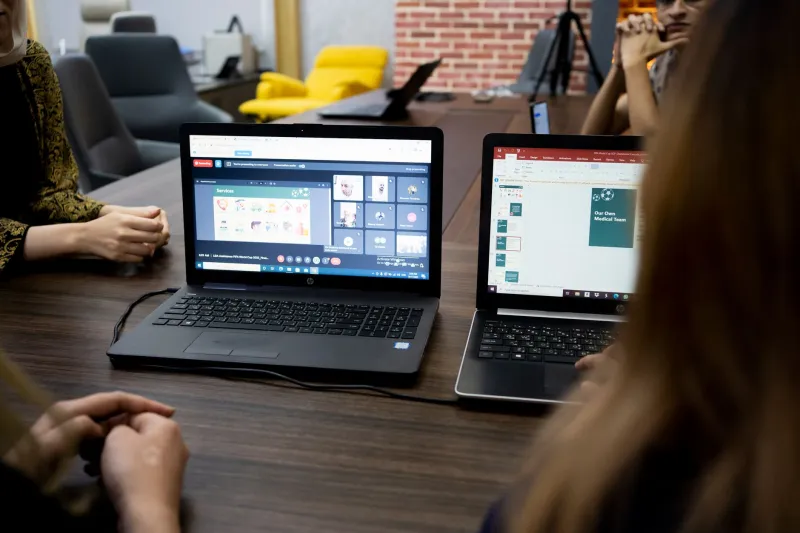
Several maker communities have started formalizing this with structured critique sessions—scheduled video calls or async threads where members share work-in-progress and get structured feedback. It sounds fussy, but makers who've done it report that it's transformative. Having a date on the calendar where you have to show what you've been working on is a powerful motivator. Having people who care about your work give you honest reactions is invaluable.
Tools That Make Remote Collaboration Real
The tooling for distributed fabrication collaboration has improved a lot. A few things worth knowing about:
Gitea and GitHub aren't just for code. Makers have been using version-controlled repositories to manage design files, document processes, and collaborate on shared projects. If you've never version-controlled a CAD project, it's a revelation—especially when multiple people are working on the same design.
Mattermost (self-hosted) and Matrix/Element give communities more control over their communication infrastructure than Discord, which matters for groups that want to own their data and aren't comfortable depending on a commercial platform.
Shared digital fabrication files—posted to Printables, Thingiverse, or community-specific repositories—are a form of asynchronous collaboration. When someone posts a design with full documentation and responds to questions in the comments, they're participating in a distributed making community even if they never meet anyone face to face.
The Argument for Showing Up
None of this is an argument against solo making. The workshop, the focus, the ownership—those things are real and worth protecting. But they work better when they're connected to something larger.
The makers who seem to sustain both their output and their enthusiasm over the long haul almost always have some kind of community they're plugged into. Not necessarily a big one. Sometimes it's just three or four people in a group chat who take each other's work seriously. That's enough to change the texture of making—to make the hard problems feel shared and the good work feel witnessed.
Fabrication is fundamentally about making things that exist in the world, that other people can use and interact with. It makes sense that the process of making them would be better when it's not entirely sealed off from other people. The machines are ours. The knowledge should be shared.