Secondhand Iron: What Happens When Makers Get Their Hands on Industrial Machines and Start Asking Questions
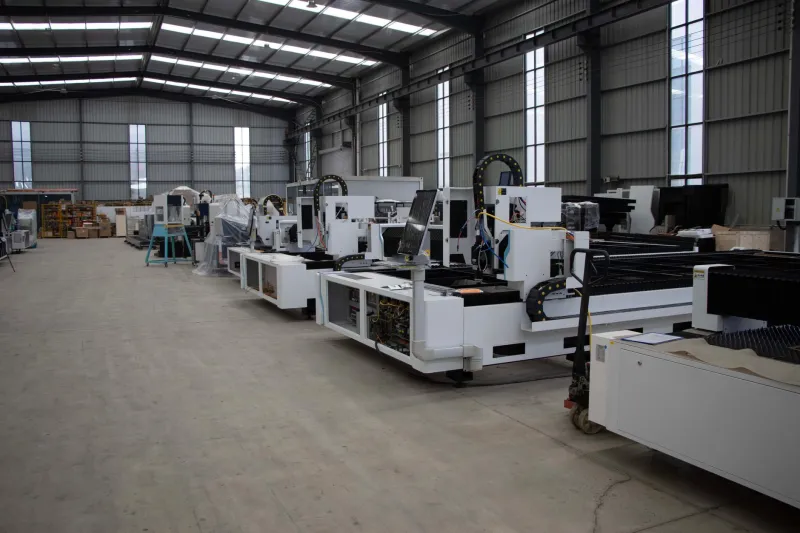
Somewhere in a warehouse outside of Detroit, there's a Mazak turning center that spent twenty years making aerospace components and now belongs to a guy named Marcus who bought it at a liquidation auction for less than the price of a used pickup truck. He didn't have the manual. The previous owner's proprietary control software was locked behind a dongle that no longer existed. The machine itself was in excellent mechanical shape.
So Marcus did what makers do. He started reverse-engineering it.
He's not alone. Across the US, a quiet wave of hobbyists, small manufacturers, and makerspace operators have been acquiring industrial fabrication equipment—lathes, mills, EDM machines, industrial laser cutters, injection molding presses—and systematically working to understand, document, and in many cases open-source what they learn. It's part archaeology, part engineering, part community project. And it's producing something genuinely valuable.
The Auction Pipeline
Industrial equipment has always cycled through the secondary market. Factories close, businesses downsize, and machinery ends up at auction houses like Bidspotter, Machinio, and IronPlanet. What's changed in the last decade is who's showing up to buy.
It used to be mostly other manufacturers and dealers. Now it's increasingly makers—people with technical curiosity, fabrication skills, and a tolerance for projects that might take months to fully sort out. The prices on older industrial equipment can be genuinely shocking. A Haas VF-2 from the early 2000s with worn ways and outdated controls might sell for $3,000-$5,000. An older Bridgeport knee mill, nearly indestructible and still widely used, can go for under a thousand bucks.
The machines are often mechanically sound. What's missing is the knowledge infrastructure around them—documentation, software, support, spare parts supply chains. That's where the maker community has started filling the gap.
The Documentation Project
One of the most interesting things happening in this space isn't flashy. It's makers writing things down.
Online communities—forums on Practical Machinist, subreddits like r/hobbycnc and r/machinists, and dedicated Discord servers—have become repositories for hard-won knowledge about specific machines. Someone figures out how to retrofit a modern controller onto a 1980s CNC knee mill. They write it up in exhaustive detail, post their wiring diagrams, share their config files. Someone else in Kansas City uses that writeup six months later to do the same job in a weekend instead of a month.
That's open-source knowledge in action—not code, but documentation. And it's accumulating into something increasingly comprehensive.
Projects like LinuxCNC have been central to this ecosystem for years. It's an open-source machine control platform that can replace proprietary controllers on a huge range of industrial equipment. The community around it has documented retrofits for dozens of machine types, turning what would otherwise be orphaned hardware into functional, modern-controlled fabrication tools.
Masso and FlashCut are commercial options that get used in similar contexts—not open-source, but supported communities that share configuration knowledge freely. The line between open-source and community-supported commercial tools gets blurry in practice.
What They're Actually Learning
The reverse-engineering happening in these shops goes beyond just getting machines to run. Makers are learning things about industrial fabrication that don't appear in any trade school curriculum.
Take tooling geometry. When you're running a production machine and you have to figure out why a specific operation keeps producing chatter, you learn—through experimentation and community consultation—things about tool deflection, chip load, and workholding that most hobbyist-level resources never cover. That knowledge gets shared.
Or consider machine calibration. Industrial machines are designed to be calibrated by factory-trained technicians using proprietary tools. Makers who can't access those resources have developed alternative methods—using precision measurement equipment, writing calibration scripts, cross-referencing against known standards. The results are sometimes surprisingly good.
Some makers have gone further, reverse-engineering proprietary file formats and communication protocols to enable connectivity that manufacturers explicitly didn't intend. This is where things get legally interesting.
The Gray Areas
Let's be straightforward about this: some of what happens in this space occupies genuinely murky legal territory.
The DMCA (Digital Millennium Copyright Act) includes provisions that can make reverse-engineering software, even for interoperability purposes, legally risky. The Copyright Office has granted some exemptions—including for security research and some repair activities—but the boundaries are inconsistently defined and frequently contested.
When a maker reverse-engineers a proprietary machine controller to replace it with an open alternative, they're typically not copying or distributing the original software. They're replacing it entirely. Most legal observers consider this to be on solid ground. But when the process involves extracting data from proprietary formats or circumventing digital locks, the picture gets murkier.
The right-to-repair movement has been pushing for clearer legal protections for exactly this kind of activity—the right to understand, maintain, and modify equipment you own. Some states have passed or are considering right-to-repair legislation, though most of it has focused on consumer electronics and agricultural equipment rather than industrial machinery.
Makers operating in this space tend to be pragmatic about the legal questions. They're generally not distributing reverse-engineered commercial software. They're documenting what they learn about hardware and sharing that knowledge. That's a different thing, and it's largely what makes this community possible.
Building the Open Knowledge Base
What's emerging from all of this is something that didn't exist before: a distributed, community-maintained knowledge base about industrial fabrication equipment. It's incomplete and uneven. Some machines are exhaustively documented; others have a single forum thread from 2014 that may or may not still be accurate.
But the trajectory is clear. Every maker who documents a retrofit, every forum post that explains a weird electrical issue, every shared config file—it all accumulates. The machines that manufacturers intended to be black boxes are becoming, slowly, understood.
For the broader digital fabrication community, that matters. It means capable industrial equipment can have a second life in maker shops and small businesses instead of being scrapped. It means knowledge that used to live only inside large manufacturers is becoming accessible. And it means the tools available to independent makers keep getting more powerful—not because the hardware gets cheaper, but because the understanding of it gets richer.