Workshops With Wi-Fi: How Makerspaces Are Quietly Rewiring American Communities
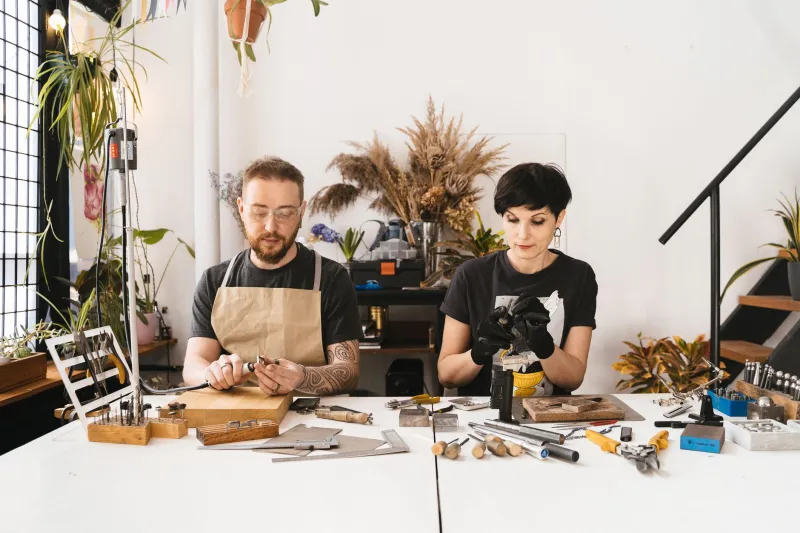
There's a building in East Akron, Ohio that used to be a dry-cleaning shop. Today, it smells like sawdust and solder, and on any given Tuesday night, you'll find a retired auto worker teaching a teenager how to use a vinyl cutter, while a single mom in the corner learns CAD software for the first time. Nobody's getting paid to be there. Nobody's required to show up. But the room is always full.
This is what the new civic infrastructure looks like — and it doesn't always come with a ribbon-cutting ceremony.
From Hobby Shop to Community Hub
The makerspace movement in the United States has been quietly building for about two decades. What started as a loose collection of hacker spaces in San Francisco and New York — places where engineers and tinkerers could share expensive equipment — has spread deep into mid-sized cities, small towns, and underserved neighborhoods that most people wouldn't associate with cutting-edge fabrication tech.
According to a 2023 survey by the Fab Foundation, there are now over 2,000 active makerspaces and fab labs operating across the country. A significant chunk of them are community-run, nonprofit, or attached to public libraries and community colleges. The demographic shift is just as notable as the geographic one. These aren't just spaces for engineers anymore.
"We started as a place for people who already knew what they were doing," says Marcus Webb, co-founder of a makerspace in Memphis, Tennessee. "Now we're the place people come to figure out what they want to do with their lives."
Open-Source Tools Are the Great Equalizer
One of the biggest factors behind this democratization is the rise of open-source digital fabrication tools — software and hardware that anyone can access, modify, and share freely. Platforms like those developed under the fab modules ecosystem allow community spaces to run serious fabrication workflows without the licensing fees that would otherwise price them out of the game.
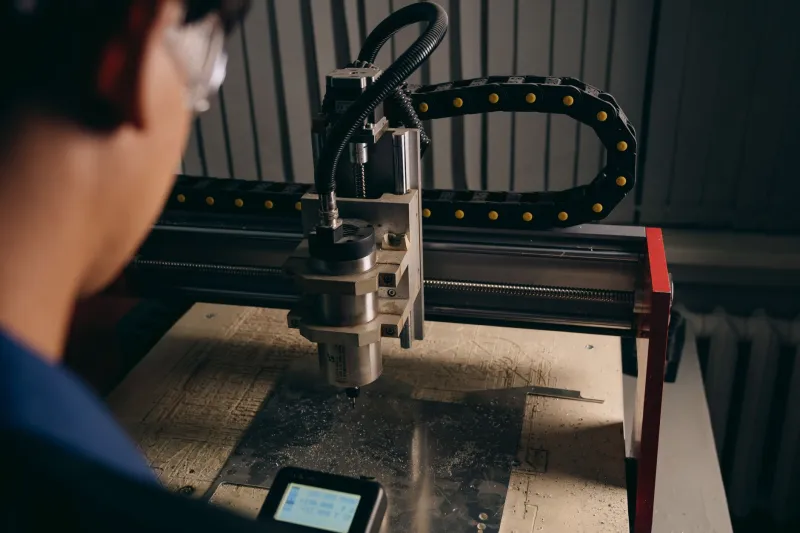
Think about what that actually means in practice. A makerspace in a low-income neighborhood in Detroit can run the same toolpaths on a CNC mill that a well-funded university lab uses — because the underlying software is free, community-maintained, and constantly improving. The machine might be older, the space might be smaller, but the capability gap is closing fast.
This isn't just a feel-good story. It has real economic implications. When residents of underserved communities gain access to prototyping tools, they can design and test products locally before investing in manufacturing. Small-batch production becomes possible. Side hustles become real businesses.
The Skill-Sharing Economy in Action
What makes makerspaces genuinely different from, say, a community center with a computer lab is the culture of reciprocal teaching. Most spaces operate on an informal knowledge economy: if you know how to do something, you're expected to eventually show someone else how to do it too.
That dynamic creates a kind of resilience that's hard to manufacture through top-down programming. In a makerspace in Albuquerque, New Mexico, a cohort of women who learned 3D printing basics through a weekend workshop went on to start a small collective producing custom orthotics for families who couldn't afford commercial options. The skills came from the community. The tools were open-source. The outcome was genuinely local.
"We didn't plan for that to happen," admits the space's director. "That's kind of the point. You put the tools in people's hands and get out of the way."
Libraries, Rec Centers, and the Civic Imagination
Some of the most interesting experiments in the makerspace world are happening inside existing civic institutions. Public libraries in particular have emerged as unlikely incubators for fabrication culture. Branches in Chicago, Denver, and Charlotte have added laser cutters, vinyl plotters, and electronics workbenches to their floor plans — and the results have been striking.
The logic makes sense when you think about it. Libraries already have community trust, physical accessibility, and a mission rooted in free access to knowledge. Adding fabrication tools is, in a lot of ways, just extending that mission into the physical world. You can check out a book about woodworking, or you can come in and actually cut something.
Rec centers and community colleges are following similar paths, often partnering with local makerspaces to share equipment, instructors, and programming. These partnerships are creating a kind of distributed fabrication network in cities that never had one before.
The Challenges Are Real
None of this is without friction. Running a community makerspace is genuinely hard. Equipment breaks, funding dries up, and the labor of keeping a space running — cleaning, maintenance, scheduling, conflict resolution — often falls on a small group of exhausted volunteers.
Insurance is a persistent headache. So is finding the balance between open access and basic safety standards. Some spaces have struggled to maintain inclusivity as they grow, inadvertently drifting back toward a demographic that skews male, white, and already technically literate.
The open-source tool ecosystem, for all its strengths, also has a learning curve. Documentation can be inconsistent. Community forums aren't always welcoming to beginners. There's real work to be done in making these tools as accessible as the spaces that use them.
But the spaces that are getting it right are doing so by treating those challenges as design problems — and using the same iterative, collaborative approach that defines good making to address them.
What Comes Next
The most forward-thinking makerspace operators are starting to think about their role in a bigger picture. As manufacturing continues to shift, as automation displaces certain jobs, and as supply chains remain unpredictable, local fabrication capacity starts to look less like a hobby and more like a strategic community asset.
Imagine a neighborhood that can prototype, produce, and repair things locally. That's not a utopian fantasy — it's a description of what some communities are already quietly building, one open-source toolchain at a time.
The garage workshop never really went away. It just got bigger, got shared, and got connected to something larger than any one person's project. That's the makerspace story, and it's still being written.
If you're looking for a space near you, the Fab Foundation's global lab finder is a solid starting point. And if there isn't one in your town yet? Well — that might be your next build.