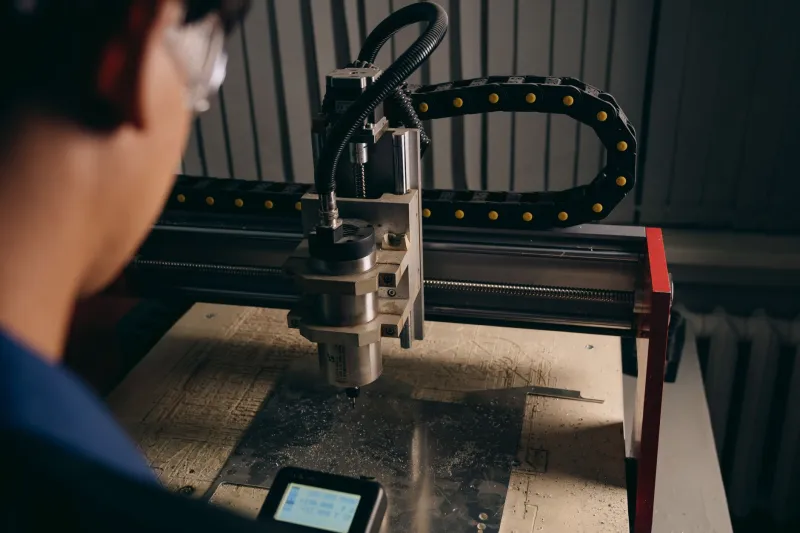
Small Pieces, Big Builds: Why the Modular Mindset Is the Best Thing to Happen to DIY
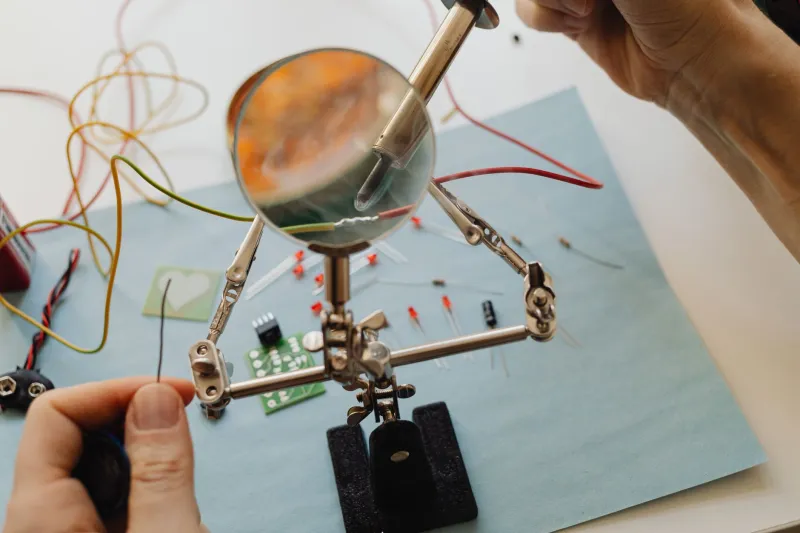
There's a certain kind of project that lives on every maker's wishlist. Maybe it's a custom CNC router. A multi-zone LED lighting controller. A fully automated greenhouse. These builds sit in the back of your mind, half-sketched on a napkin, quietly intimidating you every time you scroll past someone else's finished version on Reddit or Instagram.
For a lot of folks, those projects stay on the wishlist forever. Not because they're impossible—but because they feel impossible to start.
That's exactly the problem a growing number of makers are solving by borrowing a philosophy straight from software development: modularity. And it's quietly becoming one of the most powerful shifts in DIY culture right now.
What Does "Modular" Actually Mean in a Fab Context?
In software, modular design means writing code in self-contained chunks that can be tested independently and reused across different projects. In digital fabrication, the idea translates surprisingly cleanly. Instead of designing a project as one monolithic thing, you break it into discrete, well-defined components—each with a clear function, standardized inputs and outputs, and the ability to stand alone.
Think of it like LEGO, but for real engineering. A motor driver module. A sensor breakout. A parametric enclosure file that snaps together the same way every time. When these pieces are designed thoughtfully, you can mix and match them across wildly different projects without starting from scratch.
"Once I stopped thinking about my builds as whole things and started thinking about them as collections of solved problems, everything got easier," says Marcus Delray, a hobbyist engineer based in Austin, Texas, who runs a small open-source hardware channel on YouTube. "I built a soil moisture sensor for my garden. Then I realized the wireless comms module I used there could plug straight into my garage door monitor. Same piece, totally different project."
That kind of reusability is the core promise of the modular approach—and it's resonating hard with makers who are tired of reinventing the wheel every time they fire up their CAD software.
The Open-Source Module Libraries Making It Real
The modular mindset doesn't live in a vacuum. It's being supercharged by a rich ecosystem of open-source libraries where makers share their modules freely.
Projects like KiCad's community footprint libraries, Thingiverse's parametric design collections, and GitHub repositories full of reusable firmware components have created something remarkable: a shared vocabulary of parts that makers across the country can speak fluently. You don't need to design a motor mount from scratch if someone in Portland already did it, tested it, and posted the files under a Creative Commons license.
Fab Modules, as a platform philosophy, is built on exactly this kind of thinking. The idea that fabrication tools themselves should be composable—that you should be able to grab a toolpath module, a design module, and a machine control module and assemble them into a workflow that fits your shop—mirrors how the best maker communities are approaching their hardware projects.
Jennifer Okafor, a mechanical engineering student in Detroit who's been active in her university's makerspace for three years, puts it plainly: "The first time I pulled a pre-built parametric hinge file off a community library and it just worked with my enclosure design, I felt like I'd been let in on a secret. Like, why isn't everyone doing this?"
Increasingly, they are.
Lowering the Activation Energy for Big Ambitions
One of the sneakier benefits of modular thinking is psychological. Big projects fail to launch not just because of technical complexity, but because of the sheer cognitive weight of holding the whole thing in your head at once.
When you decompose a build into modules, each one becomes its own small, winnable project. You're not building a CNC router—you're building a stepper driver circuit. Then a limit switch interface. Then a gantry carriage. Each piece is approachable. Each finished piece is a small victory that keeps momentum alive.
"I'd tried to build an automated filament dryer twice and abandoned it both times," admits Ray Kowalski, a 3D printing enthusiast from outside Chicago who documents his builds on a personal blog. "The third time, I just told myself I was only building the temperature sensing module. That was it. Didn't think about the rest. Finished it in a weekend. Then I built the heater control module. Six weeks later I had a complete dryer and I barely noticed."
This approach also makes troubleshooting dramatically less painful. When something goes wrong in a monolithic build, finding the problem can mean tearing apart everything you've made. With modules, you isolate, test, and swap. It's the difference between finding a needle in a haystack and checking a few clearly labeled boxes.
Where the Community Is Taking This Next
The modular maker movement is starting to develop its own culture and conventions. Makers are publishing not just finished project files, but module specifications—essentially interface contracts that describe what a component expects as input and what it delivers as output, so other makers can build compatible pieces without ever coordinating directly.
There's also growing interest in standardized physical form factors. Projects like the Eurorack synthesizer community (which has thrived on modular hardware for decades) offer a compelling model: agree on a few key dimensions and connector standards, and suddenly an entire ecosystem of interoperable components becomes possible.
Some maker communities are experimenting with module registries—curated, searchable databases of tested, documented components that other makers can adopt with confidence. It's the kind of infrastructure that could make the difference between modular design being a niche approach and becoming the default way Americans build things in their garages and workshops.
"We're still in early days," says Delray. "But I think in five years, asking someone if they're building modularly is going to feel like asking if they're using version control. It'll just be assumed."
Start Smaller Than You Think You Need To
If you're ready to try the modular approach on your next build, the advice from experienced makers is almost universally the same: resist the urge to design your whole module system upfront. Pick one piece of your project—the messiest, most uncertain piece—and treat it as a standalone problem to solve.
Document what it needs as input. Document what it produces as output. Make it work in isolation. Then build the next one.
Before long, you'll have a personal library of solved problems. And that wishlist project? It might start looking a lot more like a checklist.