Making More Without Making Less of Yourself: The Scaling Dilemma Every DIY Entrepreneur Faces
There's a specific kind of Saturday afternoon that every maker knows. The project finally works. The tolerances are right, the firmware isn't throwing errors, and the thing you've been iterating on for three months is sitting on your bench doing exactly what you imagined it would do. It's a feeling that's almost impossible to describe to someone who hasn't experienced it.
Now imagine someone wants to buy fifty of them.
That moment — the pivot from "I built a thing" to "I need to build a lot of things" — is where a lot of really good ideas either find their legs or quietly fall apart. And it's a moment the maker community doesn't talk about nearly enough.
The Gap Between Prototype and Production
Scaling isn't just a logistics problem. It's an identity problem. The qualities that make maker-built products special — the handcrafted attention to detail, the willingness to iterate in public, the openness about how something was designed and why — are exactly the qualities that get squeezed when demand starts outpacing capacity.
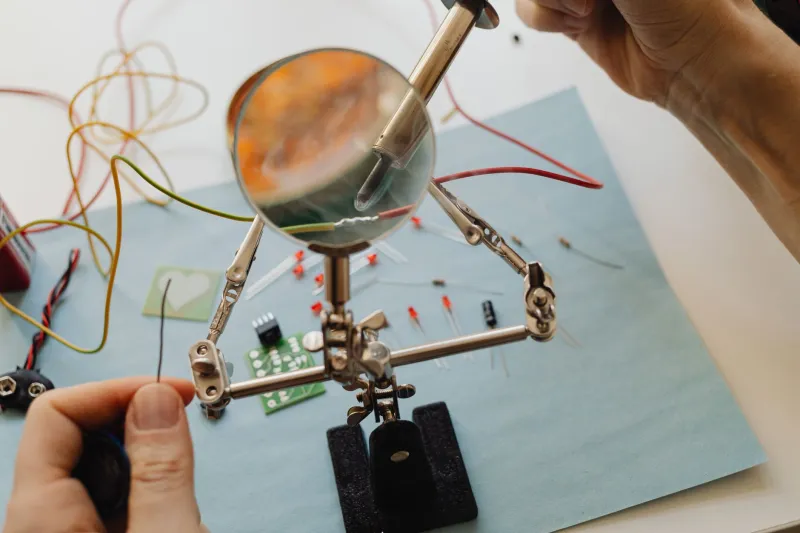
Take Portland-based electronics tinkerer Mara Chen, who started selling open-source modular synth components out of her garage in 2019. Her first batch of fifty units sold out in a weekend. Her second batch of two hundred took three months to fulfill and nearly broke her.
"I didn't have a production process. I had a hobby that I was trying to do really fast," she says. "The difference between those two things is enormous, and I didn't understand that until I was already in the middle of it."
What Mara eventually figured out — and what a growing number of makers are figuring out — is that scaling sustainably requires treating your fabrication workflow the same way you treat your design files: as something that should be documented, shared, and improved through community input.
Modular Thinking Isn't Just for Hardware
One of the most powerful concepts in digital fabrication is modularity — designing components that can be mixed, matched, and reused across different builds. It turns out the same principle applies pretty well to scaling a maker business.
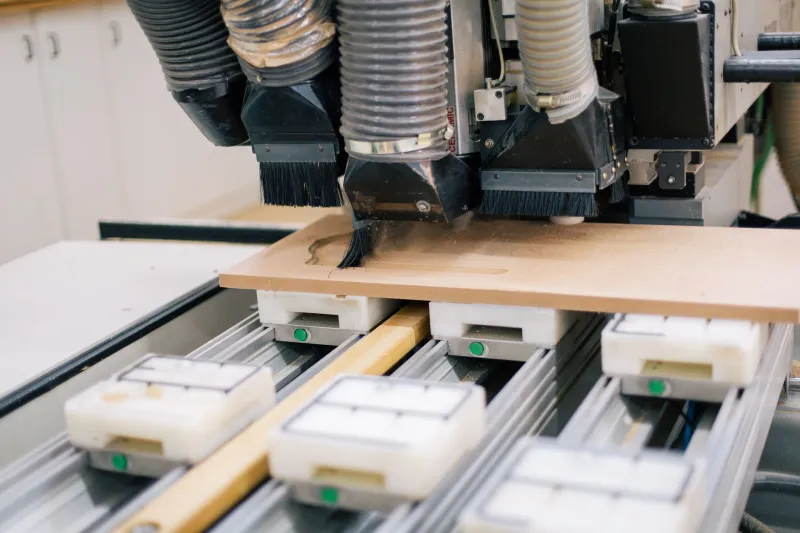
Austin-based woodworker and CNC operator Darnell Brooks started applying modular logic to his production workflow after his custom furniture pieces started getting serious attention on maker forums. Instead of treating each commission as a one-off, he began breaking his builds into repeatable sub-assemblies — standardized joinery components, pre-cut panel sets, finishing sequences that could be batched.
"I basically wrote a recipe book for my own shop," Darnell explains. "Every time I figured out a better way to do a step, I updated the recipe. And because I was already sharing my design files online, it felt natural to share the process documentation too."
That documentation habit turned out to be more than just good housekeeping. It became a community asset. Other makers started forking his process notes, suggesting improvements, and contributing variations he hadn't considered. His workflow got better because he made it open.
Community Feedback as a Quality Control System
This is where the open-source ethos stops being a philosophy and starts being a practical competitive advantage.
Traditional small-batch manufacturing typically relies on internal QA processes — a handful of people checking the work of a handful of other people. Maker-built products that stay connected to their communities get something better: a distributed network of engaged users who notice problems early and care enough to report them.
Minneapolis maker collective ThreadWorks learned this the hard way when their open-source textile automation rig started shipping to backers with an intermittent tension calibration issue. Within two weeks of the first units landing, three different community members had independently identified the root cause and posted potential fixes to the project's public repo.
"We had a bug report and a pull request before our own internal testing even caught the issue," says ThreadWorks co-founder Priya Anand. "That's only possible because we kept everything open. If we'd closed off our documentation when we started scaling, we would have been flying blind."
The lesson here isn't just "open source finds bugs faster," though it does. It's that maintaining transparency during growth actively protects the quality of the thing you built — and signals to your community that you still trust them.
Intentional Slowness as a Strategy
Not every maker wants to build a company. Some of the most interesting scaling stories in the community involve people who made a conscious decision to grow slowly and deliberately, treating capacity as a design constraint rather than a problem to solve.
Seattle-based fabricator and robotics tinkerer Jules Okonkwo capped production of his open-source robotic arm kits at one hundred units per quarter — not because he couldn't fulfill more orders, but because he wanted to maintain direct relationships with every buyer.
"I send a personal email to everyone who buys a kit," Jules says. "I ask them what they're building, what's working, what isn't. That feedback is worth more to me than the revenue from the orders I'm turning down."
It's a counterintuitive move in a culture that tends to celebrate growth metrics. But Jules's approach has produced something arguably more valuable than scale: a tight feedback loop that keeps his designs genuinely useful, and a reputation for responsiveness that money can't easily buy.
Keeping the Files Open When the Stakes Get Higher
Perhaps the biggest test of a maker's commitment to open-source values comes when the project starts generating real revenue. The temptation to lock down designs, close off documentation, and protect intellectual property is understandable — and it's where a lot of DIY-origin businesses quietly stop being DIY businesses.
The makers who've navigated this most successfully tend to draw a clear line between what they keep open and what they protect. Design files, build documentation, and process notes stay public. Specific supplier relationships, pricing structures, and production tooling might stay private. It's a pragmatic compromise that preserves the community value of openness without leaving the business exposed.
Mara, the synth component maker from Portland, puts it simply: "The files were always free. That's what got people interested. If I closed them off, I'd be competing on price with manufacturers who can undercut me by a mile. Staying open is my actual advantage."
The Soul Is in the System
Scaling without losing your soul sounds like a motivational poster. In practice, it's a series of very unglamorous decisions about documentation, workflow design, community management, and what you're willing to trade for growth.
The makers who get it right tend to share a few traits: they document obsessively, they stay honest with their communities about the challenges they're facing, and they treat their production process as an extension of their design philosophy rather than a separate business problem.
That last part is the key insight. If modularity and iteration and openness are good enough principles to build your hardware around, they're good enough principles to build your production workflow around too.
The garage doesn't have to disappear when the orders start stacking up. It just has to get a little more organized.