Trash to Toolpath: The Makers Rethinking What Fabrication Materials Can Be
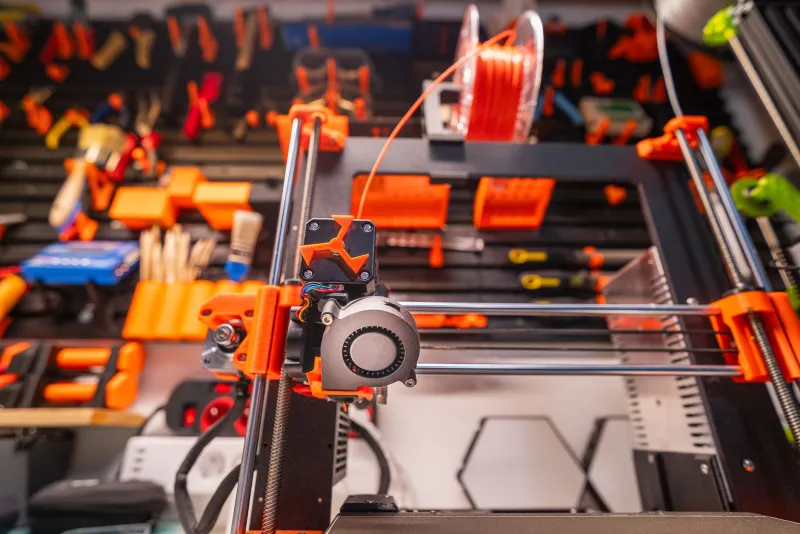
Somewhere in a garage outside Portland, Oregon, a 3D printer is running a job using filament that, three weeks ago, was part of a busted laptop. The spool didn't come from a manufacturer. It came from a desktop shredder, a pellet extruder, and about six hours of trial and error. The guy running the machine calls it "closing the loop." The rest of us might just call it the future.
Across the country, a quiet but genuinely radical shift is happening in how makers source their raw materials. Instead of clicking "add to cart" on the usual suspects, a growing number of fabricators are turning to e-waste streams, industrial surplus, and salvaged components as their primary inputs. It's not just a cost-cutting move — though it definitely helps with that — it's becoming a full-blown fabrication philosophy, and the open-source ecosystem is starting to build real infrastructure around it.
The Scale of the Problem Nobody Wants to Talk About
The United States generates somewhere in the neighborhood of 6 to 7 million metric tons of e-waste every year. That's old phones, dead printers, retired servers, broken televisions, and everything in between. A disturbingly small percentage of that gets properly recycled. Most of it ends up in landfills, or worse, gets shipped overseas where informal recycling operations handle it under conditions that are genuinely hazardous.
But embedded in all that junk is a remarkable catalog of materials. Copper wiring. Aluminum chassis. Polycarbonate and ABS plastics. Steel fasteners. Even small quantities of gold and silver on certain boards. For a maker with the right tools and a little patience, a pile of discarded electronics isn't garbage — it's a materials library.
That reframe is exactly what's driving the upcycled fabrication movement forward.
What You Can Actually Pull From a Dead Device
Let's get practical for a second, because this is where things get interesting from a fabrication standpoint.
Plastics from consumer electronics — particularly ABS from printer housings, polycarbonate from optical drives, and PETG-adjacent blends from various enclosures — can be shredded, cleaned, and re-extruded into usable 3D printing filament. The process isn't trivial. Contamination is a real issue. Mixed plastics don't play well together, and sorting by resin type requires either a testing rig or a lot of experience recognizing materials by feel, flex, and burn characteristics.
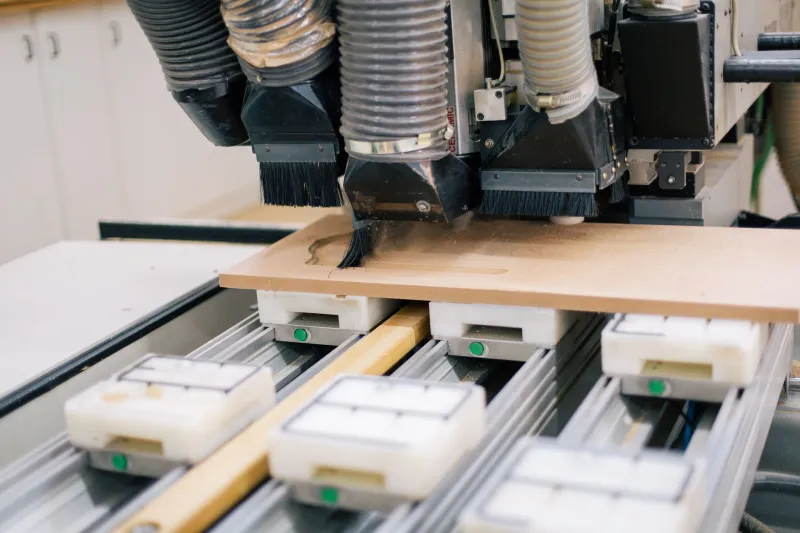
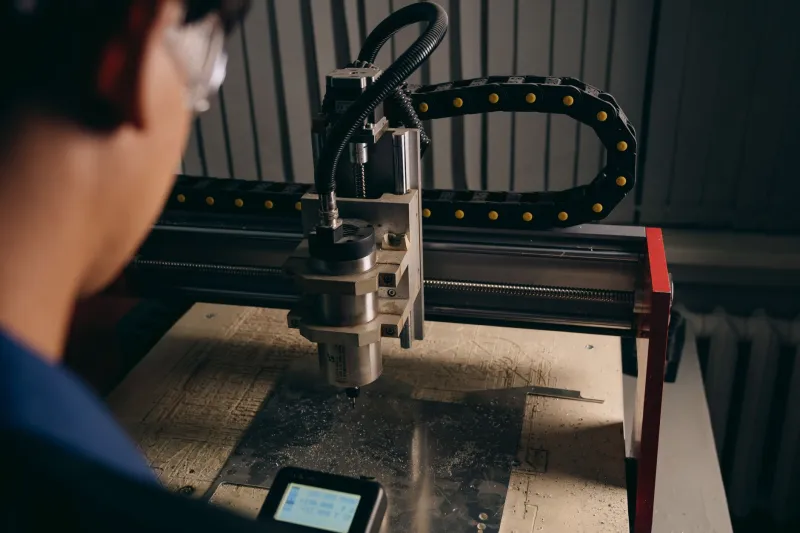
Aluminum from heat sinks and chassis components is another big one. Makers running small CNC mills have found that salvaged aluminum extrusions, once cleaned up, machine just as well as fresh stock — sometimes better, since many vintage electronics used higher-grade alloys than what's commonly available at commodity prices today.
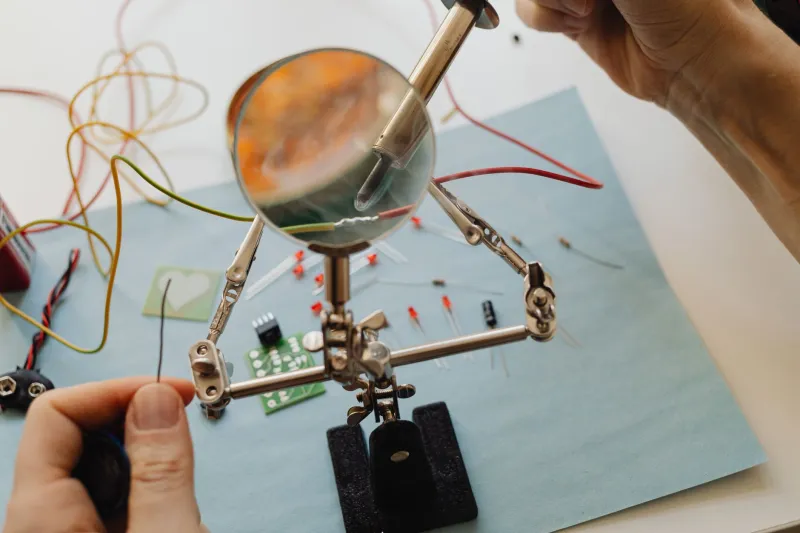
Copper is almost always worth pulling. Wiring, bus bars, and heat pipes can be melted down and recast, or used directly in projects requiring conductive elements. Several maker-focused open-source projects have published detailed guides on small-scale copper recovery that don't require industrial equipment.
The Open-Source Tools Lowering the Barrier
Here's where it gets genuinely exciting from a Fab Modules perspective: the tooling to do all of this is increasingly open, documented, and community-supported.
Projects like the Precious Plastic universe — originally out of the Netherlands but with a massive American user base — have published fully open hardware designs for shredders, extruders, and compression molds that can be built for a few hundred dollars using standard components. The community around these tools has produced thousands of build logs, material test results, and process refinements that would have taken a corporate R&D team years to accumulate.
On the filament side, tools like the Felfil Evo and various open-source extrusion projects have made desktop filament production from recycled pellets genuinely viable. The learning curve is real, but the documentation has gotten dramatically better. Forums and Discord servers dedicated specifically to recycled filament production now have thousands of members sharing everything from optimal extrusion temperatures for salvaged ABS to filtration methods for removing metal contamination before shredding.
For CNC work, the barrier is even lower. Salvaged metal stock doesn't require any processing beyond cutting to size and basic surface prep. The main challenge is material identification, and here too the community has stepped up — there are open-source spectroscopy projects and simple chemical test kits that can help identify alloy composition without expensive lab equipment.
Makers Who've Built Real Operations on Salvaged Stock
This isn't just a hobbyist experiment anymore. A handful of small American makers have built legitimate side businesses — and in some cases primary businesses — around upcycled fabrication materials.
One maker in Detroit, working out of a shared makerspace, has been producing custom enclosures for small electronics using only reclaimed ABS sourced from local electronics recyclers. He charges a modest premium for the environmental story, but the real margin comes from near-zero material costs. His setup: a commercial-grade shredder sourced secondhand, a DIY pellet dryer built from plans he found online, and a modified desktop extruder. Total capital investment was under two thousand dollars.
In Austin, a small collective has been experimenting with aluminum casting from salvaged heat sinks to produce custom brackets and fixtures for local fabrication shops. Their process is rougher than industrial casting — they're working with a backyard foundry setup — but the tolerances are good enough for non-critical structural applications, and the material cost is essentially just time and propane.
What's notable about both operations is how heavily they rely on open-source documentation and community knowledge. Neither person had formal materials science training. Both learned primarily through online communities, published build logs, and a lot of iterative failure.
The Real Challenges (Because There Are Some)
It would be dishonest to make this sound easy. Upcycled fabrication comes with genuine technical headaches.
Consistency is the big one. Virgin filament from a reputable manufacturer is highly uniform. Recycled filament, even carefully processed, can have variation in diameter, moisture content, and material properties that causes print failures. Experienced makers work around this through careful drying, slower print speeds, and dialing in settings for each batch — but it adds friction to the workflow.
Contamination is a persistent issue, particularly with plastics. Flame retardants, colorants, and composite additives in consumer electronics plastics can make them difficult or impossible to safely re-extrude. Some materials should simply not be processed in a home or small-shop environment without proper ventilation and filtration.
And then there's the time cost. Sorting, cleaning, testing, and processing salvaged materials takes real hours. For makers whose time is their most constrained resource, the economics don't always pencil out — especially when commodity filament prices have been falling.
Why It Still Matters
Despite the friction, the movement keeps growing. Part of that is economics, part is environmental conviction, and part is something harder to quantify — the appeal of a fabrication practice that's genuinely closed-loop.
There's something philosophically consistent about a maker culture that builds its own tools, shares its own knowledge, and now sources its own materials from the waste streams of an economy that threw them away. It fits. It feels right in the same way that open-source hardware feels right — like taking back a piece of the process that got outsourced somewhere along the way.
The open-source projects making this more accessible aren't finished. There's still a lot of work to do on material identification tools, processing documentation for specific waste streams, and quality testing methods that don't require expensive equipment. But the momentum is real, and the community building it is exactly the kind of distributed, collaborative, documentation-obsessed group that tends to actually solve hard problems.
One person's dead laptop really might be another person's next build. The toolpath just got a little more interesting.